Reading your stories
How CareerBot turns the stories you write into roles, facts and context you can approve.
Your record starts from your own words. You write a story about one job or project, and CareerBot reads it for roles, facts and context. Everything it finds comes back as a proposal you approve, edit or reject. Telling a story well takes time: 20 minutes or more for one job is normal. See How to tell your story.
The steps
Turning what you wrote into facts you can approve.
Read a story
You choose Read on a story.
Reads
- Your wordsThe story being read
- Approved onlyYour roles and facts
- Not yet reviewedRoles and facts already waiting in Review, so it doesn’t repeat them
- Your wordsYour other stories, for background only
- Approved onlyYour directions and limits
- Rejected, to skipFacts you rejected, with your reasons
May
Propose roles, facts and context, each with the words it came from.
May not
Take a fact from any story but this one, or invent a customer, number, result or skill.
Read the changes
You choose Read on a story that was read before.
Reads
- Your wordsThe version it read before, and the new one
- Your wordsYour other stories, for background only
- Approved onlyYour roles and facts
- Not yet reviewedThis story’s facts, approved or waiting
- Rejected, to skipFacts you rejected, with your reasons
May
Propose new facts and updates to facts the change affects, and flag facts the story no longer says.
May not
Touch facts from other stories, or change an approved fact without your okay.
Rewrite a fact
You choose Add context or rewrite on a fact.
Reads
- Approved onlyThe fact, its history and its role’s context
- Your wordsThe story the fact came from
May
Suggest new wording, with your note as the final word.
May not
Replace the fact. The new wording waits for you to accept it.
Follow-up questions
You choose Suggest questions on Review.
Reads
- Approved onlyYour record
- Your wordsYour stories, for background only
- Rejected, to skipQuestions already asked, answered or set aside
- Approved onlyYour projects and their facts
May
Ask a few short questions where an answer would add or change a resume line.
May not
Ask again what you set aside.
Check for disagreements
You choose Check for disagreements on Record, or Look for conflicts on Review.
Reads
- Approved onlyYour roles and facts, and answers you’ve given
- Your wordsEvery story
May
Ask which version is right when a story and your record disagree.
May not
Pick one for you.
Reading a story
Read a story runs when you choose Read on a story in Record (or Done, read it on your first story in Today). It reads that one story against your approved record and proposes roles, facts and context. Each fact carries the words it came from. What it proposes waits in Review.
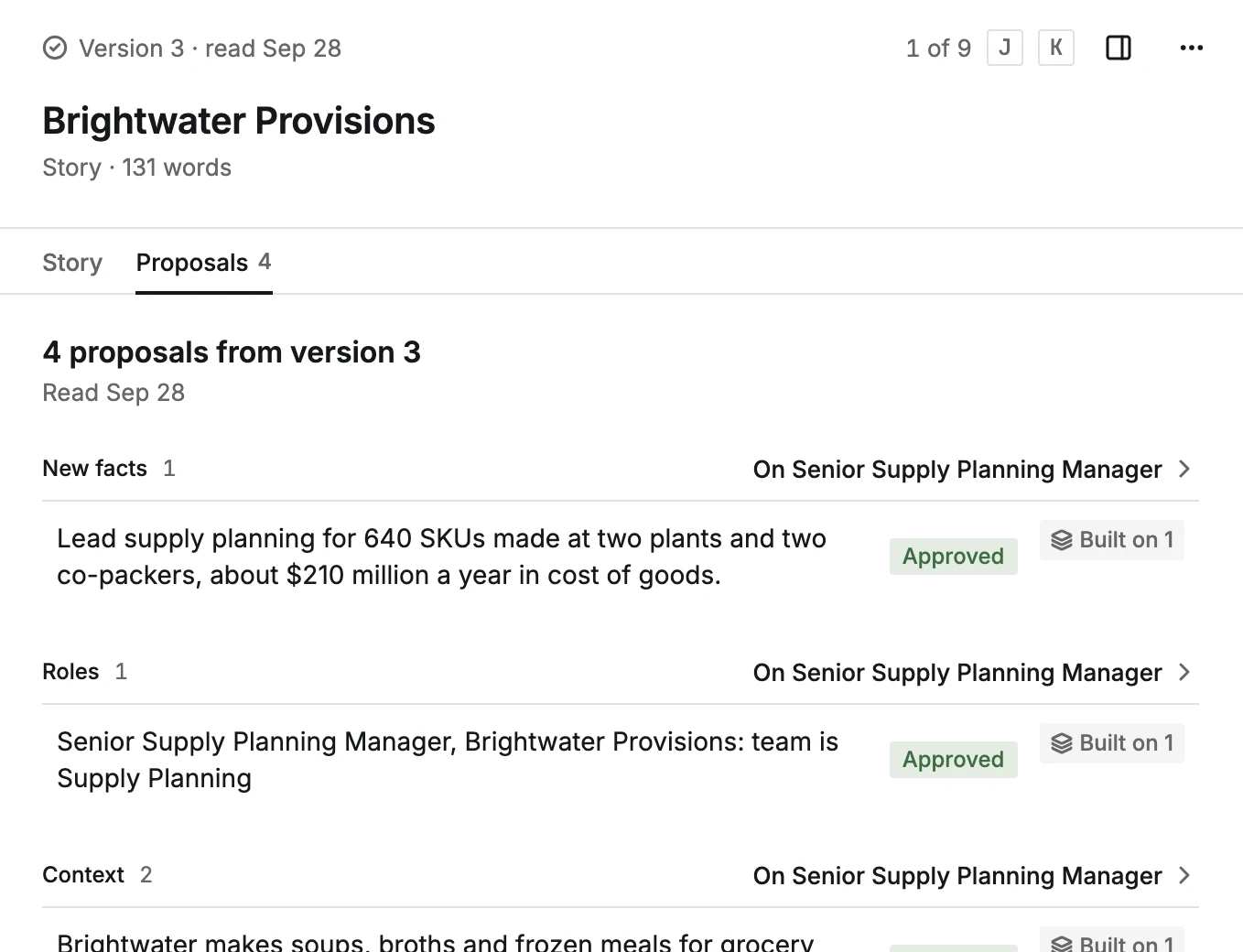
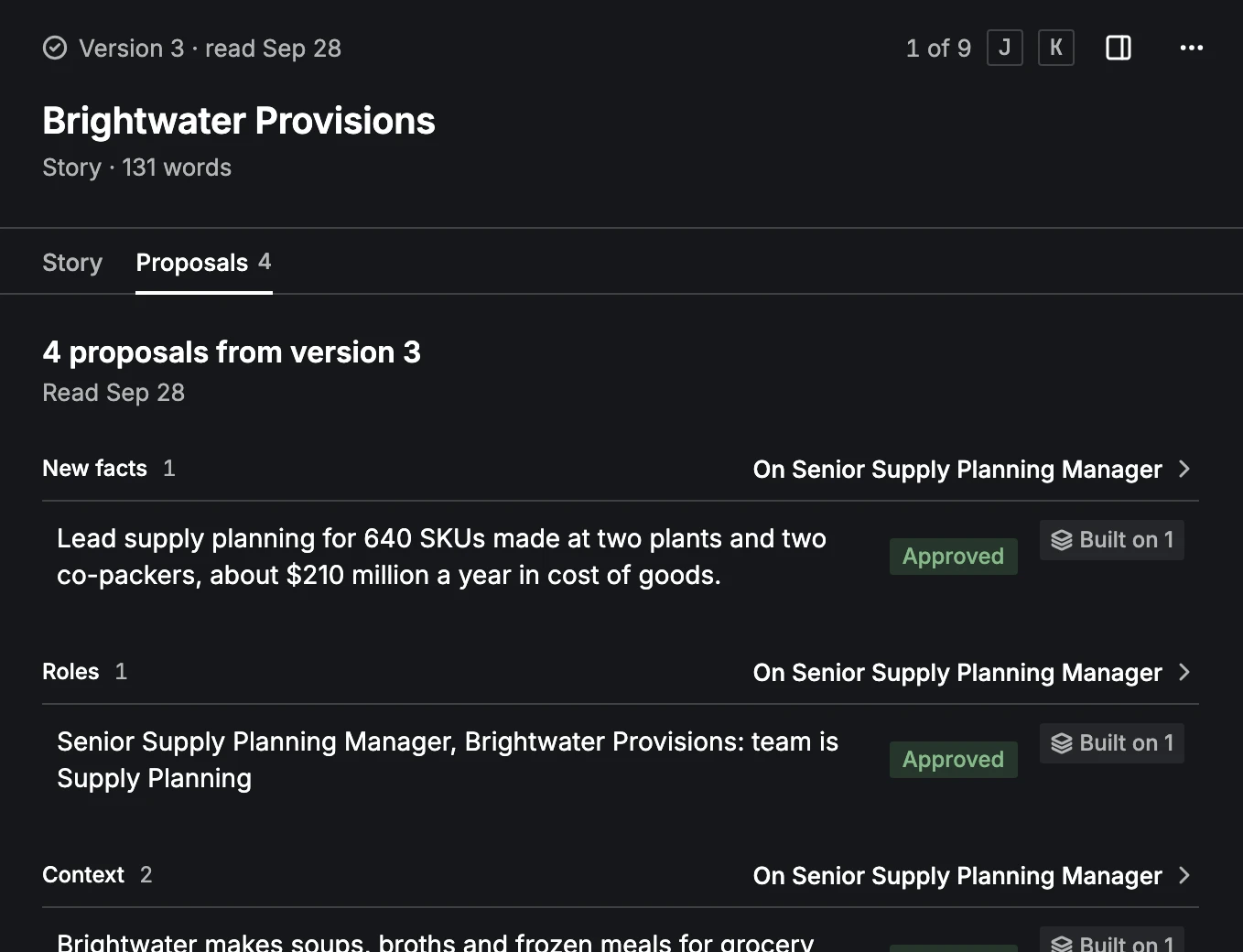
It takes facts only from the story being read. Your other stories are there to help it understand, not as sources, and a fact whose quoted words can't be found in this story is flagged for you to look at. It is told never to invent a customer, number, result or skill.
A role's title is the official one only when your story says it. When it doesn't, the role keeps what you call the job as another title, and resumes use that until you give the official title; the role and its card in Review say so. Time away from paid work (caring for someone, a move, study) is proposed as a career break, never as a job at an employer named after what you did; side projects from that time are named on the break, and their facts sit on it. Facts are written in a confident, factual voice. A number is written the way you gave it: a rounded figure you reported ("approximately 40% of revenue") is written plainly ("40% of revenue"), with no softening word your story doesn't use. A number you only guessed at ("I think it was about an hour") stays an estimate in the fact, and in every resume and letter written from it. Each role lists every tool and skill your story names, one thing per item and skills in Title Case, which is where your skills, tools and certifications are gathered from.
A fact you already have in the same words, in the same role or project, isn't proposed twice: the existing fact gains this story as another source. Facts waiting in Review and facts you rejected are passed so it doesn't repeat them.
In your story
At Brightwater the demand forecast lived in a 40-tab spreadsheet nobody trusted. I rebuilt it as a Python model, and now the demand team reruns it every Monday.
The fact CareerBot proposes
To reviewReplaced a 40-tab spreadsheet forecast with a Python model the demand team reruns every Monday.
Reading the changes
When you change a story that was read before and choose Read again, Read the changes reads only what changed since the version it last read. It may propose new facts, suggest updates to facts the change affects, and flag facts the story no longer says. It touches only facts this story is a source of, and an approved fact changes only when you accept the update.
To read a whole story again against your record as it is now, use Read again. Tick Including what I rejected to look past what you rejected from that story, for that read only.
Rewriting a fact
Rewrite a fact runs when you choose Add context or rewrite on a fact, or Ask for a rewrite in Review. You say what to change or add; your note is the final word. It reads the fact, its history, its role's approved context and the story it came from, and suggests new wording. The suggestion waits beside the fact until you use it. Details from your note that don't fit the wording are kept as context on the fact.
Follow-up questions
Follow-up questions runs only when you choose Suggest questions in Review. It reads your approved record and asks a few short questions where an answer would sharpen it: a missing number, the scope of something you led, what came of a project.
An answer about one fact becomes a rewrite suggestion on that fact. Any other answer becomes a short note, read like a story, so what it holds comes back as proposals. Choose Not now on a question and it isn't asked again.
Checking for disagreements
Check for disagreements runs when you choose Check for disagreements in Record, or Look for conflicts in Review. It compares every story with your approved record and the answers you've given, and asks which is right wherever they differ: dates, titles, employers, numbers. It never picks for you. Your record doesn't change until you answer.
Two jobs in your record at different employers whose dates overlap by three months or more are asked about too, without AI, whenever a role is approved or changed: Both are right when you held both (part-time, volunteer or freelance work beside a job), or fix one job's end or the other's start.
Edit this page on GitHub